
Master cheesemaker with heart and soul
Stefan Köhl has created a cheese haven on his farm in South Tyrol by dint of hard work, investment and determination.
Skilled manual work, raw ingredients from the farm and joint effort: Stefan Köhl has created a cheese haven on his farm in South Tyrol by dint of hard work, investment and determination.
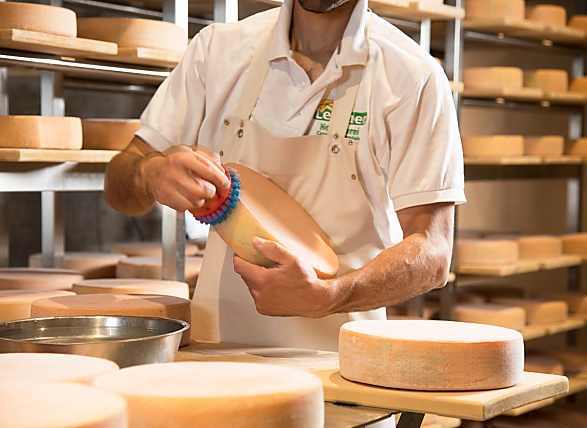
In summer, Stefan's cheese cellar is a real boon for all the senses; it's wonderfully cool and quiet, well lit and smells amazingly good. But it's no wonder, because this master cheesemaker's specialities are only made from the best natural raw ingredients on the farm. The products bears the evocative names of 'Rosengarten', Latemar' or 'Eggentaler' and point towards their place of creation, Deutschnofen, which enjoy views of the UNESCO World Heritage Site, the Dolomites. Here on Lehrnerhof, three generations pitch in: Stefan's father, his mother, his wife, along with his brother. Let us take you on an exciting journey of discovery into the kingdom of 'white gold'
Cheese mecca with views of the Dolomites
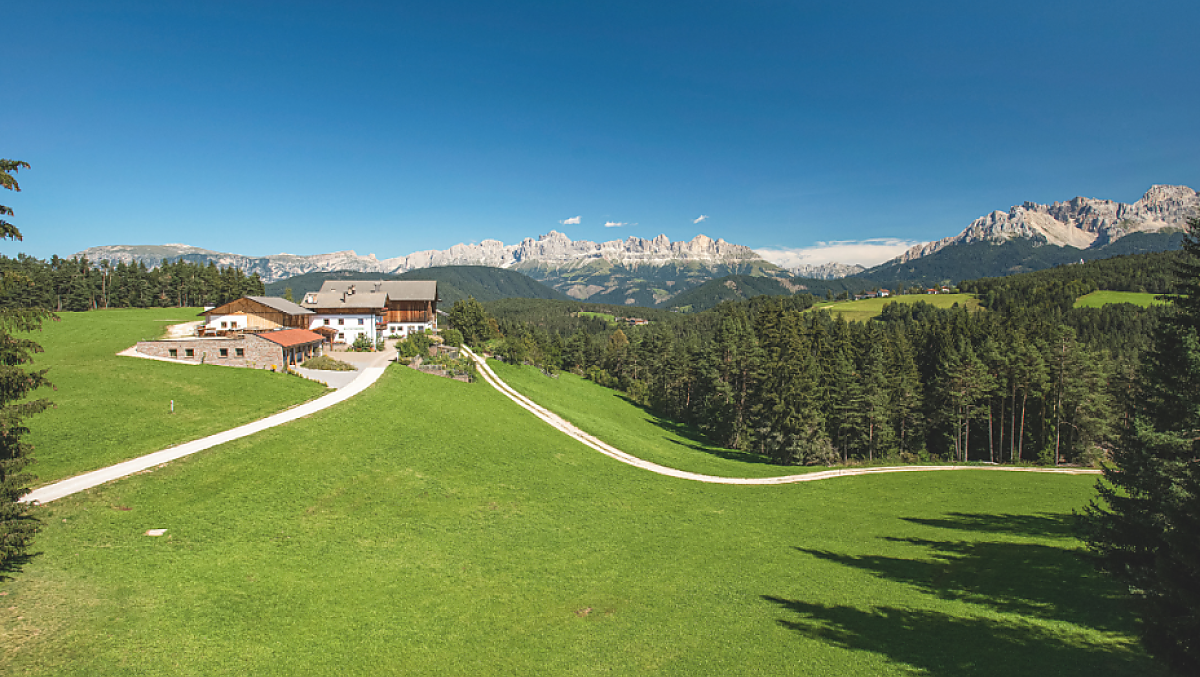
Lehrnerhof farm stands at a good 1,360 metres above sea level, surrounded by lush green meadows and dense forest. About one kilometre away from the village centre, it affords fantastic views of the Dolomites. This farm, which by law may not not be divided up amongst owners, is a dairy cattle farm with its own cheese dairy as sole source of income. It has a total area of around 45 hectares and was purchased by Stefan Köhl's great-great-grandfather at the start of the 20th century. Stefan took over the farm in 2013. He first entertained the idea of creating a cheese dairy at the age of 17 whilst on work experience in Salern as part of his schooling. After training to be a dairyman in Rotholz (Austria) and qualifying as a master cheese-maker, he was able to fulfil his dream - mainly thanks to his family, who support his efforts to this day.
The best raw ingredients for excellent quality products
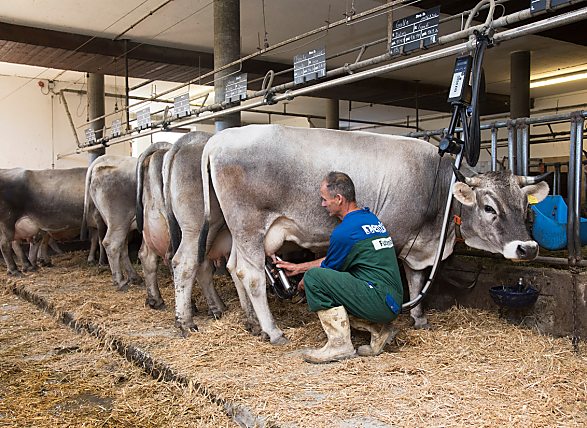
Cheese production does not begin in the dairy, but on the meadows. The Grauvieh cattle breed providing the milk grazes almost exclusively on fresh grass or hay - no silage is used. Twice a day, Stefan's father, Konrad, milks the traditional South Tyrolean dairy cows to get enough milk for processing. Around ten litres of milk are needed to make one round of cheese. Grauvieh milk is naturally low in fat and high in protein, so it is perfect for making cheese, and there's no skimming required.
Local origins and careful processing
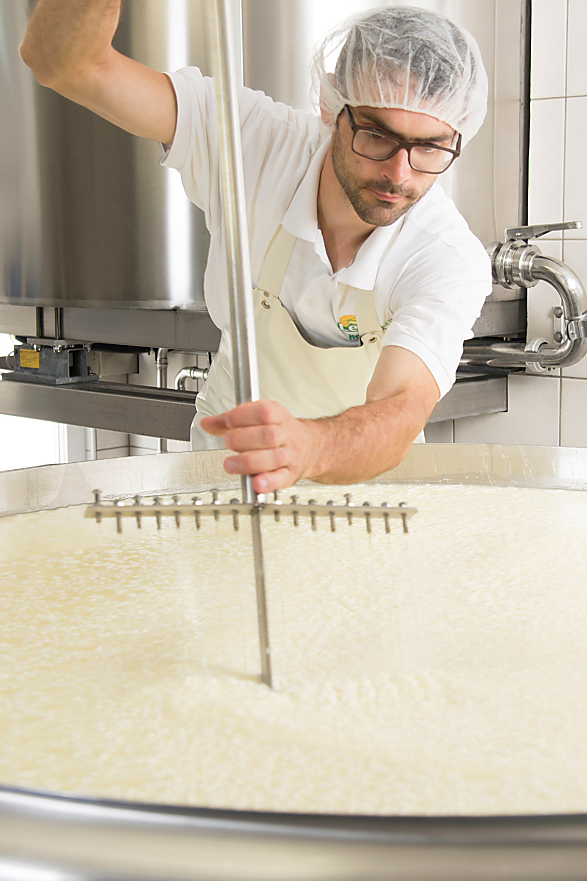
Varying the different steps of the procedure results in around ten different types of cheese in the cheese dairy. The special thing about this is that they taste so much better than industrially produced cheese - mainly because they contain raw milk that has gone right from the milking shed to the dairy, as well as benefitting from the special properties of Grauvieh cattle milk. The taste of the individual cheese types is influenced by the maturing time as well as the cultures used, which are added at the start of production. Some of the hard cheeses have already won national and international awards. Stefan Köhl also won the prize for 'Roter Hahn' direct marketer of the year 2023.
Behind the scenes
The prize-winning yellow gold may be purchased not only in farm shops, but also in selected food stores and delicatessens between South Tyrol Unterland and Sterzing. The cheesemaking process is depicted and explained in the farm shop, and you can take a look into the dairy premises through glass windowfronts to get an insight into what cheesemaking involves.
Finally, an insider tip from Stefan on how to store cheese at home: cheese will stay fresh in the fridge, unwrapped, in an airtight container!