
The waft of hay and ripening period
As the days get longer, farmers in South Tyrol have a labour-intensive time ahead of them.
As the days get longer and the weather warms up, farmers in South Tyrol have a labour-intensive time ahead of them.
Fruit, wine and cattle farmers have different jobs to do in summer, and the warm season provides them with the ideal conditions for farming. Cattle farmers have the most intensive time, as they need to ensure a successful hay harvest for the year.
Work on a cattle farm
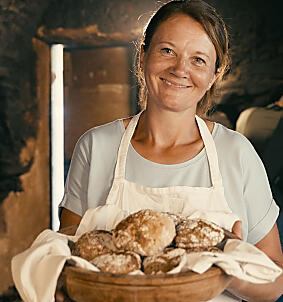
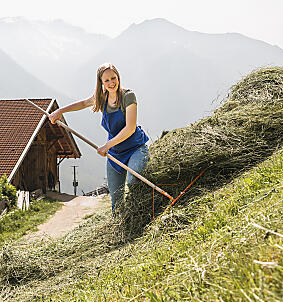
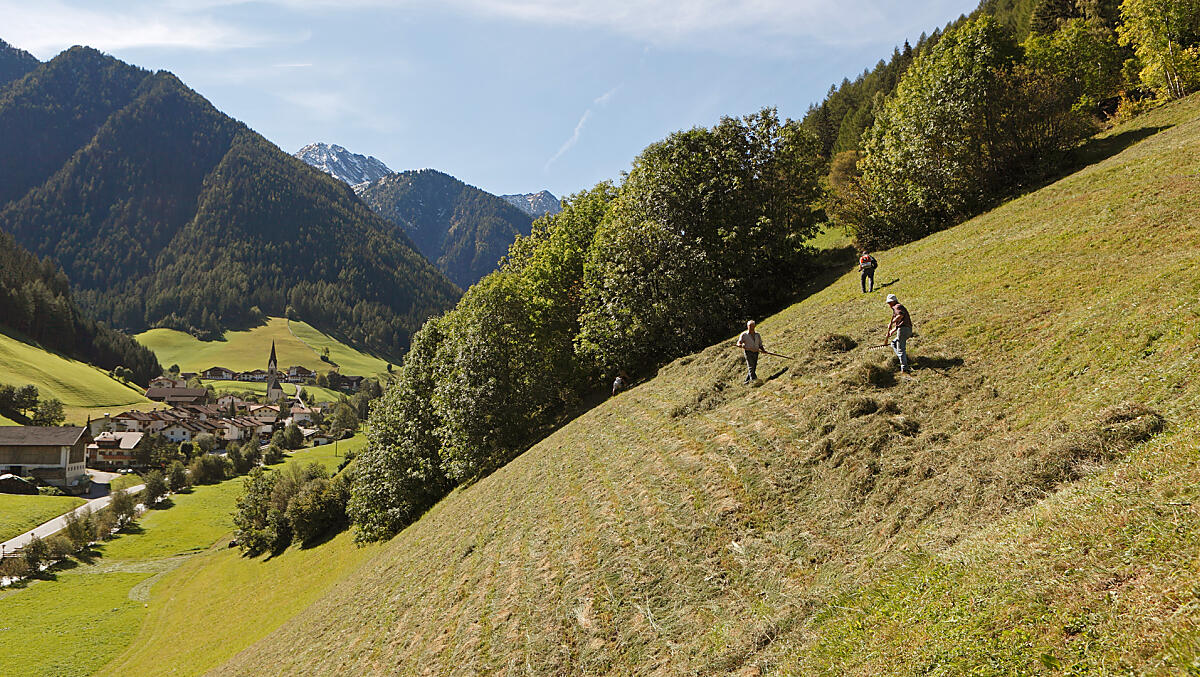
The most labour-intensive time of year on South Tyrol's mountain farm begins with the first few warm days of summer. Depending on the altitude, this can begin in the middle of May or later on, and lasts until the end of June. This is when the green mountain meadows turn into a hive of activity. After mowing, grass is left lying on the meadow for the sun and wind to dry it out. It is turned regularly to ensure that it dries evenly. Only when it is completely dry can hay be gathered with the hay loading wagon and brought safely into the barn to be stored as precious winter food for the animals.
Modern machinery makes lots of jobs easier, but the steep slopes of South Tyrol's mountain meadows have to be worked by hand. The grass is hand-cut using specialised mowing machines and transported via cable winch or another device. On this steep terrain, experience, staying power and teamwork is essential. The harvest is by no means over with the first cut of hay. The second cut is made in July, known as 'Groamet'. Towards the end of August there is the third cut, known as 'Pofl'. Altitude is a deciding factor on how often meadows are mown in summer. While higher-lying mountain meadows often only allow two harvests, the more favourable conditions of the lower-lying areas can make even four cuts possible.
There's a lot to do elsewhere, too. In early summer, mountain farmers have to look to their pastures, which means carrying out repair work on fences and clearing away branches and bushes. The young animals can go up to the pasture in the middle of June, where they stay to graze on mountain grass in the fresh air all summer long. The dairy cows stay in the cowsheds and are milked twice a day as during the rest of the year. Delicious syrups are made out of elderflower bushes and fragrant peppermint from the herb garden. Honey from the bees is now centrifuged as well. There is lots to do in the vegetable and berry gardens, which are now bursting at the seams.
Work on a fruit farm
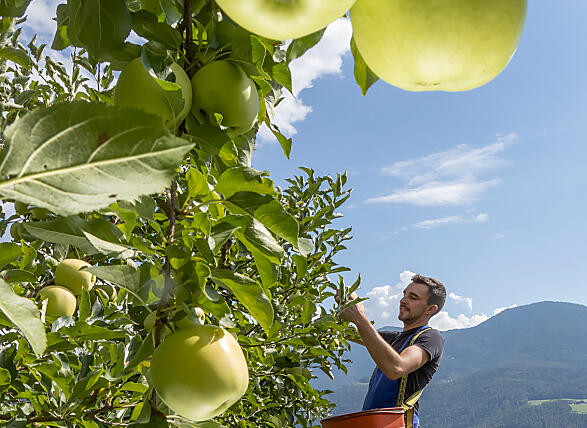
Summer brings a whole set of challenges for apple farmers, who are busy tending the trees and apples to ensure a plentiful harvest. Summer is a time of growth. Farmers make sure that the trees get enough nutrients and that the fruit can ripen well. Small apples are plucked off trees in early summer - known as hand thinning on fruit farms in South Tyrol - to give the remaining fruit enough space to grow and thrive.
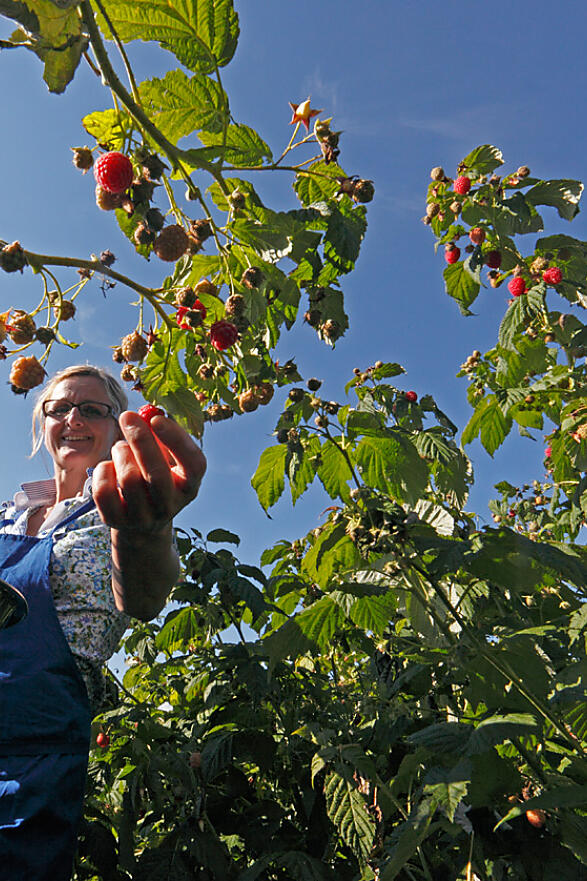
A major aspect of work in summer is irrgation. As temperatures rise and the soil dries out more quickly, it is vital that the trees get enough water. Another part of the work is fighting pests and disease. It's high season for lots of insects and funguses that can affllict apple trees. Farmers have to be alert and carry out regular checks in order to recognise potential problems in time and take the necessary measures. In August it's time for picking. The first apple varieties, such as Gala, are picked by hand. The other fruit trees on the farm also bear lots of fruit. with cherries, apricots and peaches being plucked fresh from the tree and made into delicious jams.
Work on a wine farm
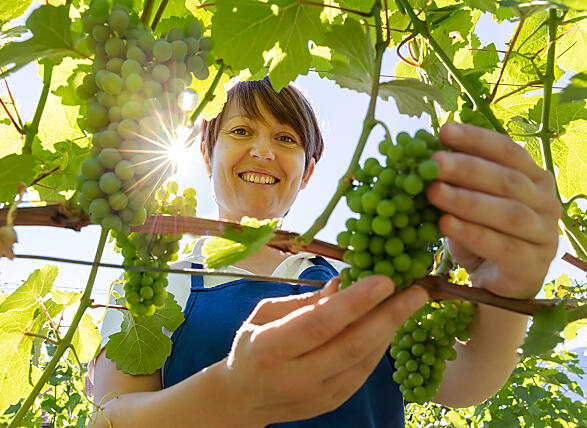
Wine farmers have to have a lot of patience waiting for the harvest. To make sure that the foliage does not cast too much shade on the blossom in summer, it is important to keep leaves off the flowers. Between April and the end of June, pruning, known as 'Schabing', is carried out. This allows more sunlight and air to reach the grapes, which leads to greater protection from disease. Removing surplus leaves and shoots helps the vine to direct extra energy straight to the fruit.
All summer long, farmers regularly check their plants, bend twigs back into their wire frames and mulch the ground vegetation so that the vine don't absorb too much water. At the end of June, flowers appear on the vines. Farmers hope for good weather during this time, as the blossom doesn't like too much rain. As of mid-July, the flowers slowly ripen into grapes. Farmers carry on with pruning, as leaves grow quickly in the warm, early-summer sun and and they need to be kept in check. At the end of August, the harvest can begin.